
Checking for a Warrant in Choudrant
Choudrant posts no online warrant search, so a warrant check here runs through people instead of a search box. Two offices hold most of the answers. One is the court that filed the case; the other is the parish office that handles the money. Work the steps in order.
- Read the citation and note the issuing agency and the court named on the notice.
- Call the Choudrant Police Department at 318-768-4111 and ask which court received it.
- Ask the parish tax collector whether the ticket has entered the system.
- Ask the clerk whether the docket shows a missed setting or a bench warrant.
- Get the court's written instruction for clearing the matter before sending money.
Note: A paid Choudrant ticket can still leave a warrant entry open, so ask about the court record separately from the balance.
Where Choudrant Warrant Tickets Go
The sheriff's ticket guidance places Choudrant police citations in the parish collection route, which surprises anyone who planned to settle things at the village counter. The Lincoln Parish Sheriff's Office fines and tickets page lists sheriff, state police, and Choudrant police tickets among those its tax collector handles. So a village officer can write the citation, and a parish office can take the money.
The village police page lists department contacts and points residents toward the sheriff's office for the parish route. Entry into the system takes time. The same guidance says a ticket may need several days to appear, and it suggests calling two to three weeks after it was written to learn the amount. Some offenses demand an appearance rather than a payment. When a ticket goes unpaid or a court date passes, the parish process adds $75 per charge, and a bench warrant can follow.
Choudrant Police and Municipal Court
The village runs a small department, and its published contacts are the quickest way in. Three offices cover almost every Choudrant warrant question between them.
Choudrant Police Department
Chief Willard Sullivan and Assistant Chief Don McDonald
318-768-4111
Emergencies: 911
None of the three publishes a warrant lookup, so each contact leads to a person rather than a database. The Choudrant police department can describe a citation it wrote. Village Hall can say which court holds the file. The sheriff's office answers for parish enforcement and custody.
Choudrant Court Hours and Warrant Questions
Village Hall posts weekday hours for permits, utilities, and general village business. Those are not court hours. They are not warrant hours either. A Choudrant resident who drives to Elm Street on a Friday afternoon hoping to find a judge will meet a closed counter.
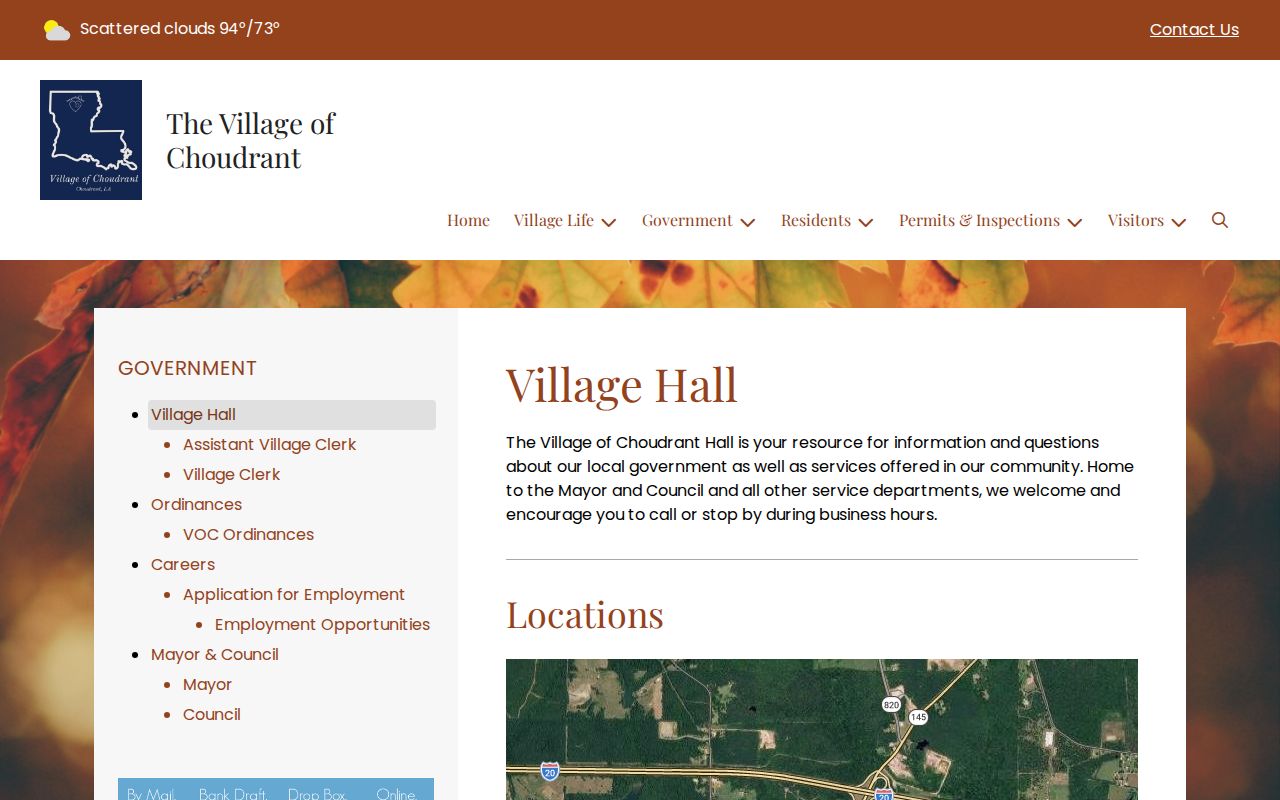
The address works for directions, not for a warrant status check. The village also publishes payment options, and that page concerns utility bills rather than tickets or court fines. A citation payment sent through a utility channel leaves the Choudrant court case untouched.
Choudrant Warrant Types
A Choudrant warrant falls into one of a few familiar groups, and which group it sits in tells you which office holds the file.
| Warrant Type | How It Arises | Who Issues It |
|---|---|---|
| Village traffic warrant | An unpaid Choudrant police citation or a missed village date | The court that received the citation |
| Ordinance warrant | An unresolved village code or municipal violation | The municipal court custodian for the village |
| Failure-to-appear bench warrant | A missed setting on a case already filed | The judge handling that docket |
| Parish arrest warrant | A charge filed after a probable-cause finding | A parish magistrate or district judge |
| Ward court process | A matter filed in a justice-of-the-peace court | The ward justice of the peace |
Court type matters more than the writing officer. A Choudrant village citation and a state traffic charge can land in different courts.
The Three-Way Routing on a Choudrant Citation
A Choudrant citation actually has three stops, though residents often treat it as one. One office writes it, a court files it, and a separate office collects the money.
| Stop | Office | The Question to Ask |
|---|---|---|
| Who issued it | Choudrant Police Department | Was this filed in a village court or a parish court? |
| Who records the case | The court named on the notice | Does the docket show a current warrant or a missed setting? |
| Who takes the money | The parish tax collector | Has this ticket entered the system, and what is owed? |
Write the answers next to the citation. A Choudrant clerk who can see the docket settles in one call what a general office cannot.
Inside a Choudrant Warrant Record
A Choudrant warrant entry is short, and most of its fields simply route you to the right counter. Write down the reference number first.
| Case or citation reference | The ticket or docket number, formatted such as C-2026-00418. |
|---|---|
| Issuing agency | The village department that wrote the citation. |
| Filing court | The court named on the notice, which holds the case record. |
| Charge or violation | The village ordinance or traffic violation at issue. |
| Amount recorded | The fine, costs, and any contempt amount the court has set. |
| Status | Active, recalled, or resolved, as the court's docket shows it. |
Ask the clerk to read the entry rather than summarize it. Also ask for a copy of any order that clears the Choudrant warrant.
Choudrant Warrant Questions Sent in Writing
The village publishes a contact form with a department selector, plus fields for name, email, phone, subject, and message. It routes a question to the right desk without a phone call. It also leaves a written record of when you asked. A records question belongs with the office that holds the file, though, not with a general inbox. The form warns that submitted emails may be public under state law, so keep the message narrow. Name the citation, the date, and the court, and leave out anything a Choudrant clerk does not need.
How Choudrant Warrants Fit the County System
Village cases stay local until the charge belongs elsewhere. A Choudrant ordinance or village traffic matter remains a municipal file. A district criminal case goes to the parish clerk and the Third Judicial District Court.
Warrant flow: village police and municipal court › Lincoln Parish Sheriff › parish court minutes and state administrative holds
Parish collection shows the overlap best. A Choudrant ticket can be paid at a parish counter while the case file stays with the court that filed it. Payment moves the money, not the file. When a matter turns out to be parish-filed, the Lincoln Parish warrant records page lists the county-wide channels worth checking.
Choudrant Warrant Records and Public Access
Louisiana law treats Choudrant court files as public records, within the usual limits that apply to any court record. An office can release a record it holds. It cannot be asked to guess at an outcome.
Key Rules:
La. R.S. 44:31 - An adult may inspect and copy public records, and the office holding the record must justify a refusal.
La. R.S. 44:3 - Law-enforcement records tied to protected investigative material may be withheld.
Children's Code rules limit access to juvenile matters, and a sealed file is not a public one.
Name the court and the case reference in the request. Be specific. If a village file turns out to be a parish case, send the request to the Lincoln Parish Clerk of Court rather than the sheriff, since a Choudrant matter does not always stay with the village.
What Choudrant's Published Numbers Miss
The published figures describe a small village and its offices. They say nothing about warrant volume, because no warrant count is published for Lincoln Parish or any of its towns, Choudrant included.
Read those numbers as structure, not answers. A village of Choudrant's size works through phone calls and written requests, and the absence of an online warrant list means you ask the office directly.