
Lincoln Parish Arrest Warrants Explained
Probable cause is the standard, and a magistrate decides it. An officer or a complainant brings the court a complaint or affidavit. That paper describes the alleged offense, its date and place, and the facts behind the accusation. The magistrate weighs it. If probable cause holds, the arrest warrant issues. In Lincoln Parish, the sheriff's Criminal Investigations Division notes that its detectives train in warrant preparation, evidence work, and constitutional issues. That training supports the process. It does not make the sheriff the issuing authority. The court issues; the sheriff serves. The sheriff posts no public roster of Lincoln Parish arrest warrants, and the department's site offers no name lookup. A search that turns up nothing only means no list is published. An arrest warrant names a person, yet it is a charging document rather than a verdict on the case.
How a Complaint Becomes a Lincoln Parish Arrest Warrant
Louisiana sets the sequence in La. C.Cr.P. arts. 202 and 203. A Lincoln Parish complaint moves through that statutory flow and the public description of local practice.
- An officer or complainant files a complaint or affidavit describing the alleged conduct, the date, and the place.
- A magistrate reviews it and decides whether probable cause exists. State law allows remote issuance under specified conditions.
- The warrant is written in the name of the state and identifies the issuing date and place, the person or a description, the offense, and the command to arrest and bring the person before the court.
- A noncapital warrant may state bail. Many do not, and the court sets conditions at the first appearance instead.
- The issuing court keeps the case file, and a serving agency receives the authorized command.
No Lincoln Parish office publishes an update schedule or a status-code dictionary for its systems. Ask the court directly when a docket entry will change.
Inside a Lincoln Parish Arrest Warrant
State law fixes the minimum content of a Lincoln Parish warrant. A case file adds administrative layers on top. The table separates the required fields from the ones collected later.
| Issuing court and date | The court, parish, and the date and place the warrant was issued. Reference numbers follow a docket format such as 2026-CR-01234. |
|---|---|
| Subject identity | The legal name, or a statutory description when the person is not identified by name. |
| Offense | The alleged offense with its statutory citation and, if shown, a felony or misdemeanor classification. |
| Command | The order to arrest and bring the person before the court. |
| Bail | An amount or conditions when the warrant states them. Frequently the field is blank. |
| Issuing authority | The magistrate's or judge's signature or electronic authorization. |
| Service return | The serving agency's record of execution, kept by the agency rather than the court. |
| Recall or disposition | Any later court action that withdraws or clears the command. |
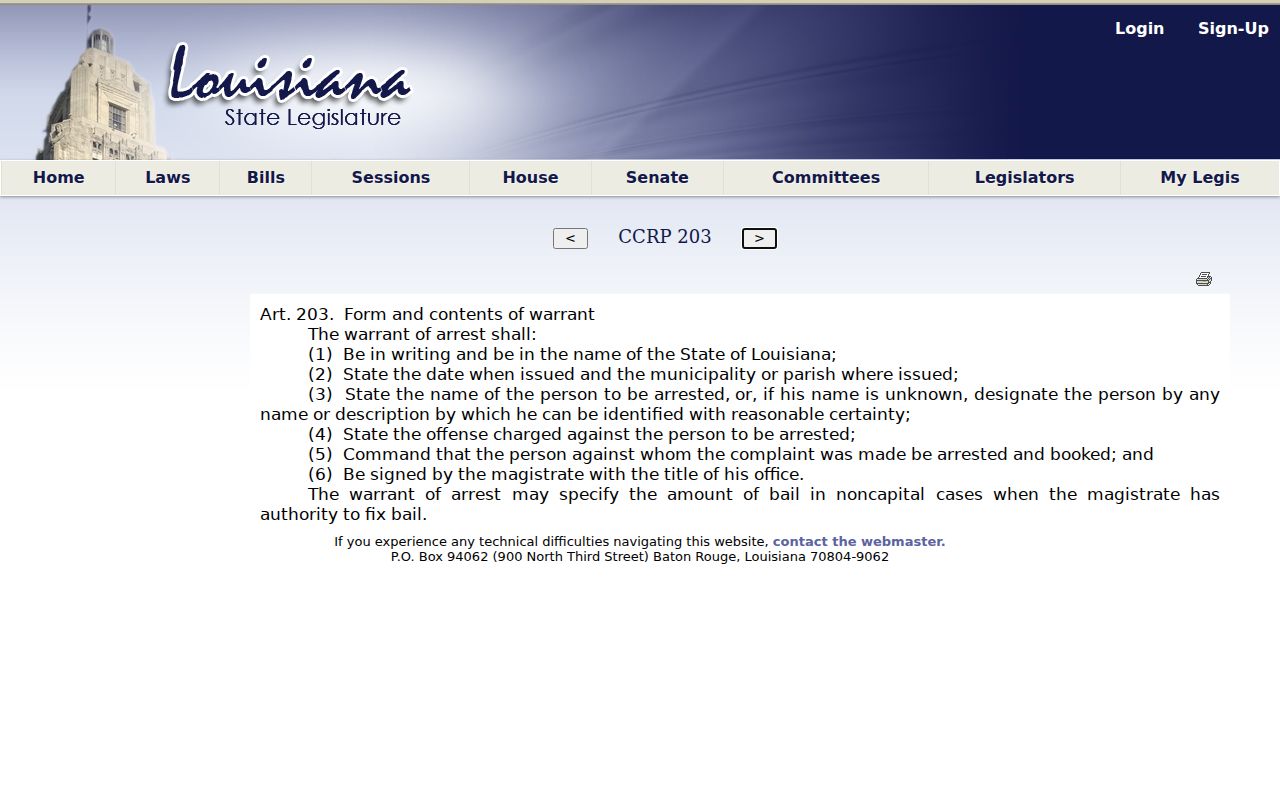
The statute behind that field list is La. C.Cr.P. art. 203, which also allows a noncapital warrant to specify bail. Check it for the Lincoln Parish details.
Sealed Lincoln Parish Warrants You Cannot See Yet
Not every arrest warrant is visible when it issues. A grand jury indictment can set an arrest in motion, and the indictment or warrant may stay sealed until service. That step protects an investigation rather than hiding the record from the person named. Anyone asking about a case in Lincoln Parish should ask two separate questions. Is the case sealed? If it is, which record can the clerk release now, and what changes once the matter is served or unsealed? The answer tells you whether to request the docket entry, the warrant itself, the affidavit, or a service return. Public-records law lets agencies withhold active-investigation material, confidential-source information, juvenile records, and other protected content. Ask the office to name the statutory basis for each withheld portion and to release the rest.
Serving Arrest Warrants in Lincoln Parish
Jurisdiction and assignment decide who serves a warrant, not one central office. Deputy sheriffs handle parish cases. City officers work city cases, and marshals and constables serve process within their own authority. Lincoln Parish records do not assign service for any particular case.
Lincoln Parish Sheriff's Office
161 Road Camp Road
Ruston, LA 71270
318-251-5111
Agency systems do not update the instant the court acts. If a Lincoln Parish court recalls a warrant, ask whether the serving agency gets notice and how long the update takes. Then confirm both records yourself.
Remote Issuance of a Lincoln Parish Arrest Warrant
Louisiana allows a warrant to be issued under specified remote conditions, so a signature does not always happen inside the courthouse. That matters to anyone checking the paperwork, because it explains how fast an affidavit can become an arrest command outside ordinary business hours. What does not change is custody of the record. The court still holds the case, and the clerk still records the entry. Lincoln Parish describes no electronic warrant interface, so do not assume an online portal exists. An electronically authorized warrant is still confirmed through the issuing court, never through a vendor service.
Comparing Arrest, Summons, and Bench Warrants
Three different commands can reach a person in one case file. Louisiana law treats them differently, including a limited summons option for certain outstanding misdemeanor and traffic warrants in Lincoln Parish.
| Point | Arrest Warrant | Summons | Bench Warrant |
|---|---|---|---|
| Basis | Probable cause for an alleged offense | Authority to direct an appearance instead of a custodial arrest | A missed appearance or court obligation |
| First police action | Custody and booking | Service of a notice to appear | Custody when an officer acts on it |
| Availability | Standard route | Limited and discretionary under La. C.Cr.P. art. 211 | Issued by the case judge |
| Typical next step | First appearance and bail | The scheduled court date | The issuing docket |
A summons is not something a person can demand. Only the officer and the Lincoln Parish court can say whether the option applies to a given case.
What a Lincoln Parish Arrest Report Is Not
An arrest report is not the warrant affidavit, and neither one decides anything about guilt. Reports are incident records written by the arresting agency. The warrant is a court command resting on a probable-cause finding, and the affidavit is the sworn statement behind it. That distinction has a real cost when a reader leans on the wrong document. A report may not show the issuing court, the docket reference, or a later recall. A warrant record may leave out the investigative narrative. Identity confusion is a second risk in Lincoln Parish. Common names, suffixes, and old addresses all create false matches. Give the office enough detail to tell two people apart, and never post identifying details about someone else. Request the specific document you need by name, and let the office tell you if it is held somewhere else.
If There's an Arrest Warrant for You
Information first, then movement. Before you act, call the court that issued the warrant and ask which case it belongs to, whether the docket still lists it as active, and what the court allows next. Lincoln Parish callers can also ask the sheriff's non-emergency line what walking in to appear would involve.
Important: Contact a Louisiana attorney before deciding how to appear, and never rely on a text or call demanding payment to avoid arrest.
Three routes exist: appear voluntarily, post bond where the court allows it, or file a motion to recall or quash the warrant. No one can promise an outcome ahead of time. Lincoln Parish publishes no parish-wide bond schedule or surrender window. The home page walks through what to do if you have a warrant step by step.
Federal Warrants Stay Outside Lincoln Parish
Federal court geography puts Lincoln Parish in the Western District of Louisiana, Monroe Division. Federal judges issue those warrants, and federal agencies or task forces serve them. No Lincoln Parish clerk can read one, recall one, or clear it.
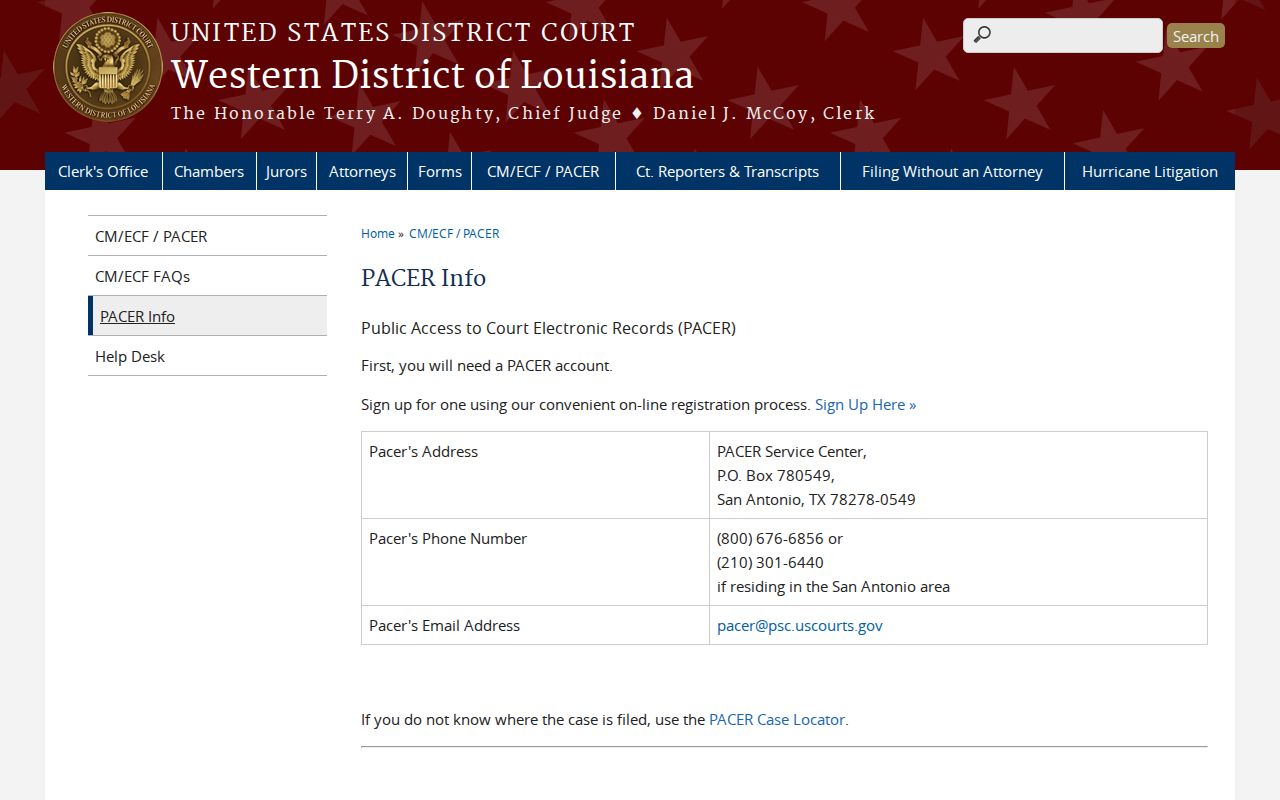
PACER needs an account and may charge fees. The court also warns users never to share credentials or sealed material with third-party services. Keep in mind that a docket search is not a full warrant search, since sealed documents and agency operational records sit outside the docket, beyond what any Lincoln Parish lookup reaches.
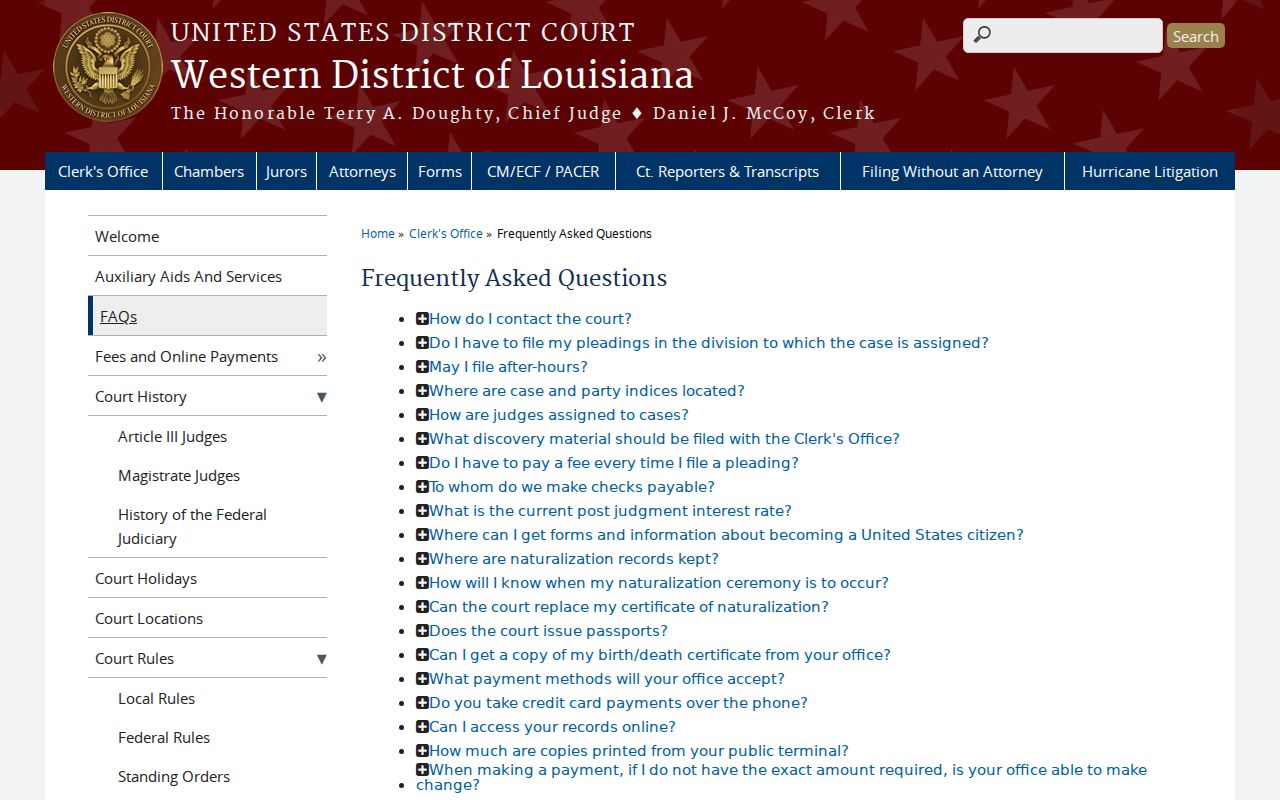
The district also runs public terminals at divisional courthouses for non-sealed criminal cases. For a federal fugitive question, go to the U.S. Marshals Western District office and its official tip channels. A Lincoln Parish counter is not the right desk.